

Exploring Mintel's 2027 F&B predictions: The Segmentation Reset
Age, income and household size can tell food and drink businesses something about their customers. But understanding how people respond to the pressures in their lives could become increasingly valuable in 2027.
That is the thinking behind ‘The Segmentation Reset’, one of Mintel’s 2027 Food & Drink Predictions. Explored in its recent EMEA webinar, the prediction considers how financial pressures, environmental concerns and changing living arrangements are reshaping consumer identities and purchasing decisions.
Understanding how consumers cope
Rising costs are prompting consumers to make selective compromises. They may trade down to a cheaper version of an everyday product, find ways to make meals go further or cut spending elsewhere to protect a favourite treat.
These decisions can make purchasing behaviour harder to predict through traditional demographic categories alone. Two shoppers of the same age and income may approach value very differently, depending on their priorities, responsibilities and living arrangements.
“In 2027 coping behaviours will become increasingly useful in understanding consumers,” says Alice Pilkington, Mintel Food & Drink Associate Principal. “Demographics still provide context, but we will also increasingly need to ask what constraints someone faces and how they are trying to work around it.”
Making meals go further without losing their appeal
One opportunity highlighted in the webinar is helping consumers improve familiar meals while managing their budgets.
Consumers may know how they would like to eat, but lack the money, time or resources to do so consistently. Meanwhile, the popularity of ‘life hacks’ on social media has made finding inventive ways around these constraints part of everyday food culture.
Mintel’s research presented in the webinar found that 28% of Spanish adults have added pulses or vegetables to homemade meals to get more portions out of them.
For brands, this creates an opportunity to position ingredients as useful additions that bring more to a meal than extra volume.
“By highlighting how these affordable ingredients can contribute to fibre intake, satiety and texture, as well as extra portions, brands can help more consumers see meal-stretching additions as upgrades rather than a cheap alternative,” explains Pilkington.
Connecting environmental values with everyday choices
Environmental concerns also form part of this changing picture. The findings shared by Mintel suggest that shoppers continue to see a role for their own food and drink choices, even when the scale of environmental challenges feels daunting.
Among French consumers, 73% agree that even small sustainable steps in food and drink choices can make a positive difference to the environment. Meanwhile, 68% of UK 16–34-year-olds say making environmentally friendly food and drink choices is important for their self-image.
The webinar identified regenerative agriculture as one area where brands could connect environmental priorities with benefits that feel personally relevant.
It also highlighted that 51% of German consumers feel the way food and drink ingredients are grown has a big impact on their functional benefits. This is a finding about consumer perceptions, rather than proof of a nutritional advantage, but it points to interest in the relationship between farming practices and the finished product.
Supporting individuality in shared households
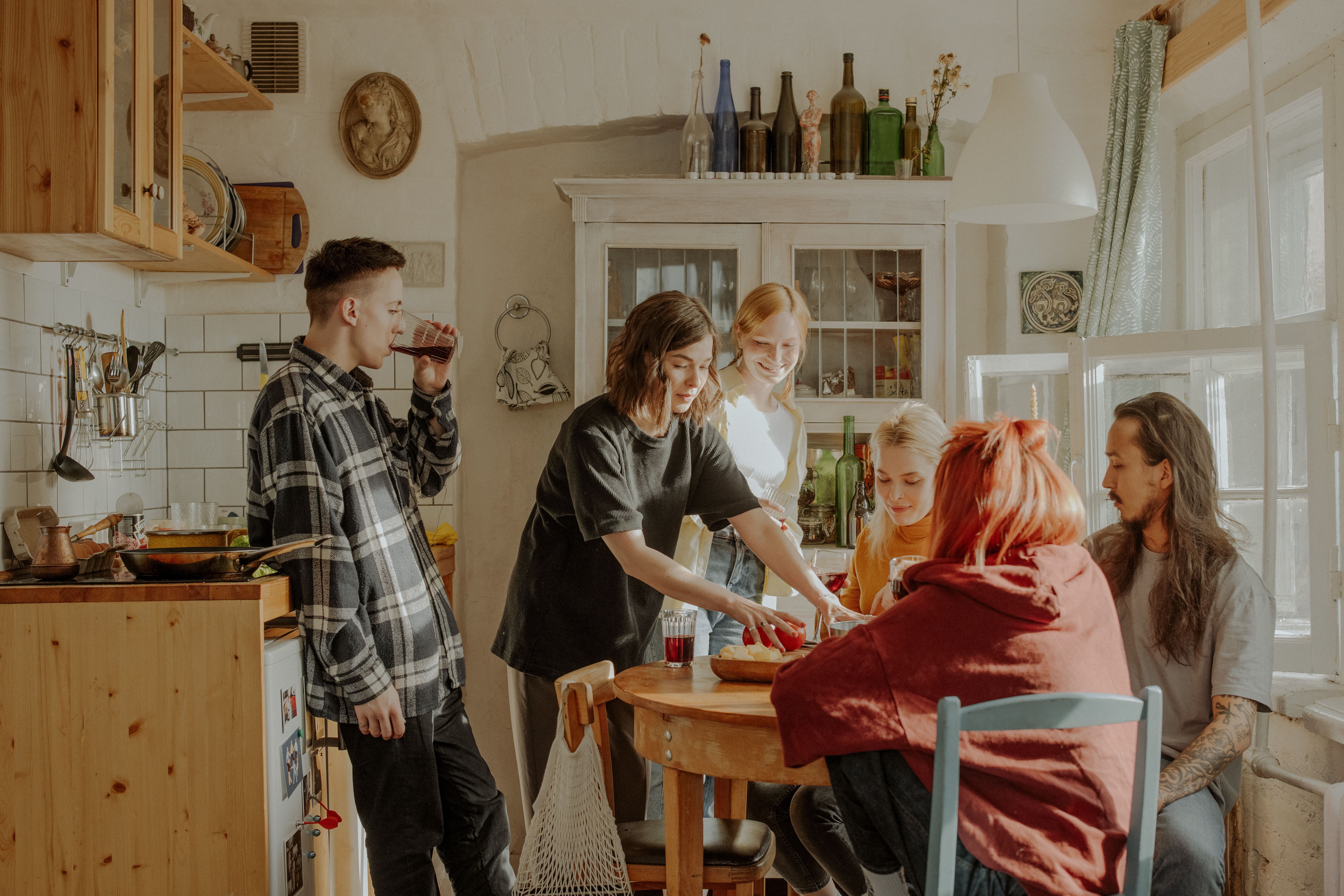
Changing living arrangements are creating another set of needs. Shared homes can include young professionals, adults living with parents and several generations under one roof, each with different routines, tastes and priorities.
According to research presented in the webinar, 78% of UK Gen Z living with parents or family say their life is not where they thought it would be by now.
“As traditional milestones of independence lose relevance or become harder to reach, younger consumers living at home will seek smaller, everyday ways to assert autonomy, particularly through food & drink,” says Pilkington.
For food and drink businesses, this creates scope for products that support both shared meals and individual preferences. As a practical application, buyers could consider sauces, toppings and accompaniments that allow household members to personalise a common meal, alongside products that give individuals a small daily ritual of their own.
Discover more of Mintel's Global Trends Predictions at mintel.com/trend-predictions