)
)
Future of Food Competition 2025: Celebrating innovation, impact and a vision for a better food system
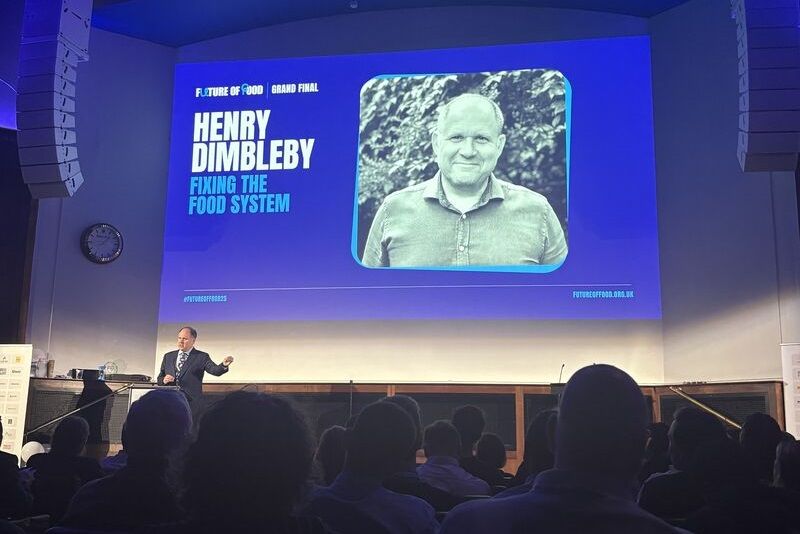
The food and drink sector gathered at the Royal Geographical Society on 27 November for a day dedicated to breakthrough thinking, ambitious entrepreneurship and the future of how we grow, make and eat food, organised by Barney Mauleverer and Alice Hall. This year’s Future of Food Competition brought together 16 finalists, selected from more than 200 entries, each working to address critical challenges across health, sustainability, technology, equity and waste.
After a full day of pitches and judging, No More Lids Limited was announced as the Future of Food 2025 Champion, securing the Gold Award for its lid-free packaging solutions that aim to cut plastic waste across foodservice and retail. The judges were impressed by the company’s clarity of purpose, commercial scalability and potential for widespread environmental impact.
Celebrating the 2025 Winners
Alongside the Gold Winner, three further awards recognised exceptional innovation:
Gold Winner: No More Lids Limited
Silver Winner: Wildfarmed
Bronze Winner: KLURALABS
Popular Vote Winner: field doctor.
From regenerative flour to precision fermentation, sustainable packaging and medically informed ready meals, this year’s winners demonstrated how varied and solution focused modern food innovation has become.
Showcasing the Finalists
The 16 finalists represented a diverse cross section of the sector, with ideas spanning regenerative agriculture, ingredient science, urban farming, circular retail, microbiome analysis, children’s nutrition, plant based alternatives and healthier convenience formats. Together they highlighted the breadth of thinking required to build a food system that supports both people and planet.
The finalists were: Grub Club, Symplicity Foods, Wildfarmed, Change-Box, Farm Urban, Bold Bean Co, No More Lids, Hoxton Farms, Fable Food, KluraLabs, Kyomei, The Protein Ball Co, Better Nature, Auralytica, Freddie’s Farm and field doctor.
Perspectives from the Main Stage: Henry Dimbleby, Miranda Ballard and Andy Cato
The event also featured keynote talks from leaders shaping the future of food.
Henry Dimbleby delivered an insightful discussion on how the rapid rise of accessible weight loss drugs including Ozempic and Mounjaro is likely to influence consumer behaviour and the wider food industry. With appetite suppression expected to reduce portion sizes and shift preferences toward nutrient dense, lower calorie foods, supermarkets may face declining basket sizes and changes in market share.
Miranda Ballard of NielsenIQ explored the growing role of artificial intelligence in product development. Her talk covered how forecasting tools, predictive modelling and advanced consumer insights can help brands identify gaps in the market and move more quickly from concept to launch. She emphasised the potential for AI to support smarter, more accurate product decision making at every stage of development.
Andy Cato of Wildfarmed offered a sweeping historical and scientific perspective on the evolution of agriculture. In a talk spanning soil science, biodiversity, early farming systems and regenerative techniques, he explored how centuries of agricultural practices have shaped the challenges we face today. His central message focused on the opportunity to rebuild resilience into farming by restoring natural processes, improving soil health and supporting farmers with practical, field based guidance. He highlighted the rapid momentum behind regenerative agriculture and the increasing availability of data that allows businesses to measure and value environmental outcomes.
A Community Moving Forward
The 2025 Future of Food Competition highlighted not only the ingenuity of individual innovators but also the strength of a growing community committed to reshaping food production and consumption. With more than 200 entries and rising enthusiasm for sustainable and practical innovation, the event demonstrated a sector ready to explore new ideas and collaborate on long term solutions.
The day closed with a sense of optimism and urgency. The challenges facing the food system are significant, but so too is the energy being brought to solving them. The finalists, speakers and attendees reflected a shared belief that the future of food can be healthier, more resilient and more equitable, provided the industry continues to invest in innovation and support the people driving it forward. Check out Future of Food's new collaborative platform here.
)
)